
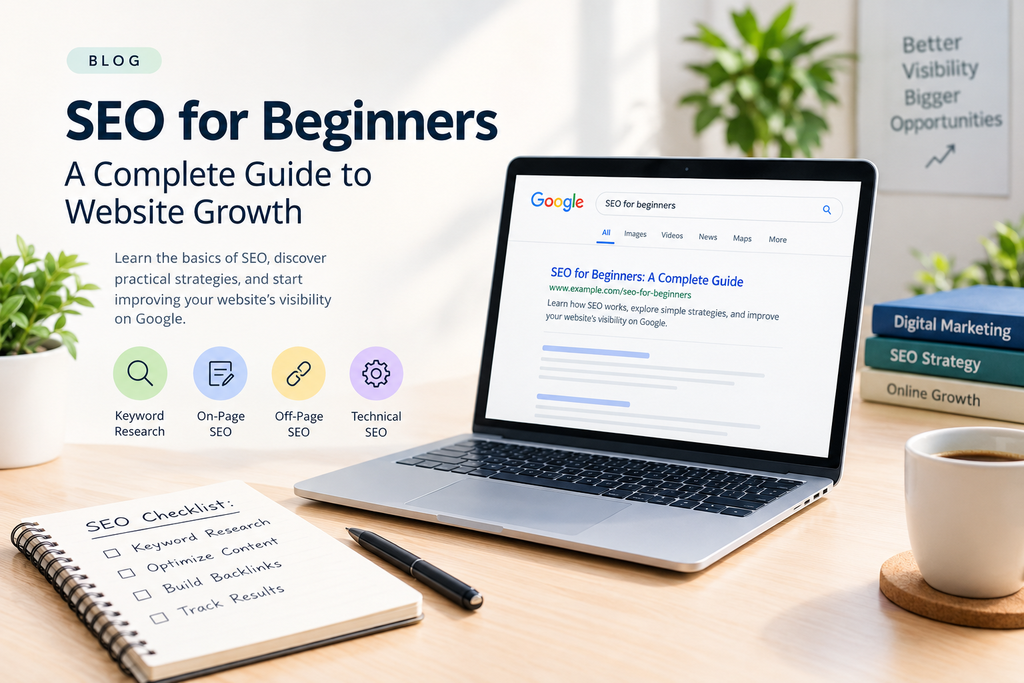
Have you ever wondered why some websites appear at the top of Google search results while others remain hidden? The answer often lies in Search Engine Optimization (SEO). SEO is an essential digital marketing strategy that helps businesses SEO for beginners improve their online visibility, attract potential customers, and increase website traffic without paying for every click.
Whether you are a small business owner, blogger, or beginner in digital marketing, understanding SEO can help you build a stronger online presence. In this guide, we will explore what SEO is, how it works, and the essential steps to improve your website’s performance on search engines.
1. What Is SEO?
Search Engine Optimization (SEO) is the process of improving a website so that search engines such as Google can understand its content and show it to relevant users. It involves optimizing website content, improving technical performance, SEO for beginners and building credibility through relevant links.
For example, if someone searches for “digital marketing services in Perinthalmanna,” an SEO-optimized website may have a better opportunity to appear in relevant search results.
The primary goal of SEO is to connect your website with people who are already searching for the products, services, or information you provide.
2. Why Is SEO Important for Your Business?
SEO plays an important role in building a successful online presence. A well-optimized website can help businesses reach potential customers when they search for relevant products or services.
Key benefits of SEO include:
- Improved online visibility: Help potential customers discover SEO for beginners your website through search engines.
- Organic website traffic: Attract visitors from unpaid search results.
- Better user experience: Make your website easier to navigate and understand.
- Increased credibility: Useful content and a trustworthy website can build confidence among visitors.
- Long-term growth: SEO can continue to attract relevant visitors as your website gains visibility.
Although SEO takes time and consistent effort, it can become a valuable part of your long-term digital marketing strategy.
3. Different Types of SEO
Understanding the main types of SEO helps you create a complete optimization strategy.
On-Page SEO
On-page SEO focuses on optimizing individual website pages. It includes using relevant keywords, writing helpful content, creating descriptive headings, optimizing title tags and meta descriptions, and adding useful internal links.
For example, a blog about local SEO should use a clear title, organized headings, and information that answers the reader’s questions.
Off-Page SEO
Off-page SEO involves activities outside your website that can help build its reputation and authority. Examples include earning relevant backlinks, building genuine business relationships, and gaining mentions from trusted websites.
Quality matters more than simply collecting a large number of links.
Technical SEO for beginners SEO
Technical SEO helps search engines access, crawl, and understand your website. Important areas include website speed, mobile usability, secure HTTPS connections, XML sitemaps, and fixing broken pages.
A technically healthy website provides a stronger foundation for SEO.
4. How to Improve Your Website’s SEO
Follow these practical steps to start optimizing your website.
Step 1: Conduct keyword research. Identify the words and phrases your target audience uses when searching online. Choose relevant keywords that match your content and business goals.
Step 2: Create helpful content. Write original articles that answer real questions and provide useful information. Avoid repeating keywords unnaturally.
Step 3: Optimize your page titles. Create unique, descriptive titles that explain the page’s main topic and naturally include your primary keyword when appropriate.
Step 4: Improve website performance. Make sure your website works well on mobile devices, loads efficiently, and offers easy navigation.
Step 5: Monitor your results. Use Google Search Console and Google Analytics to understand search visibility, website traffic, and user engagement.
SEO is an ongoing process, so review your results regularly and improve your strategy based on the data.
5. Common SEO Mistakes to Avoid
Many beginners make mistakes that can reduce SEO for beginners the effectiveness of their SEO efforts. Avoid keyword stuffing, copying content from other websites, using misleading page titles, ignoring mobile users, and creating low-quality backlinks.
Another common mistake is expecting immediate results. SEO performance depends on competition, website quality, content relevance, and many other factors. Consistent improvement is more valuable than chasing quick results.
Conclusion
SEO is one of the most useful digital marketing strategies for SEO for beginners improving a website’s visibility and attracting relevant visitors. By understanding on-page SEO, off-page SEO, technical SEO, and keyword research, beginners can build a strong foundation for long-term online growth.
Start with simple improvements, publish helpful content, and monitor your website’s performance regularly. With patience and a well-planned strategy, SEO can help your website reach the right audience and support your business goals.